
The Institute for Far Eastern Studies of Kyungnam University (Director Kwan-Sei Lee) held the 20th Samcheong Forum on June 9 at 7 p.m. in the IFES Conference Room of the Peace Hall under the theme, “The New Cold War at Sea: Shifts in Asia-Pacific Maritime Strategy and Security on the Korean Peninsula”. The forum was organized to provide an in-depth assessment of the maritime force buildup by the United States and Japan, as well as the growing strategic alignment between China and Russia. The event featured presentations by Lyle Goldstein, Senior Fellow at the Watson Institute for International and Public Affairs at Brown University, and Vitaly Kozyrev, Distinguished Professor of Political Science and International Studies at Endicott College.
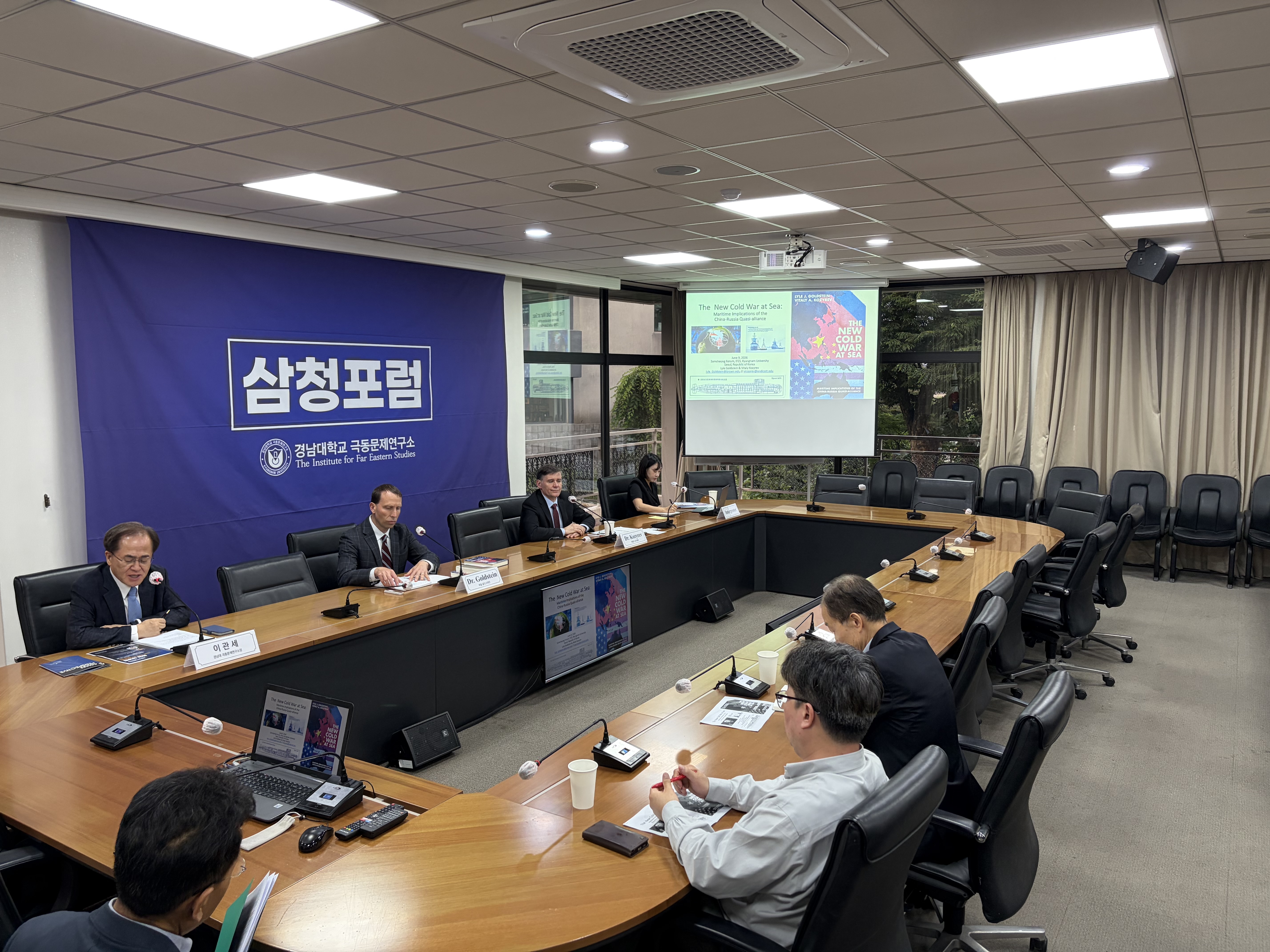
In the first presentation, Senior Fellow Lyle Goldstein characterized China–Russia cooperation as a strong ‘quasi-alliance’ and argued that “the new focal points of bilateral maritime cooperation will be undersea warfare and the Arctic.” He noted that “China’s new-generation submarines show signs of incorporating Russian design elements,” highlighting the deepening exchange of undersea technologies between the two countries. He further warned that this growing alignment “could lead to a dangerous dynamic of an arms race.”
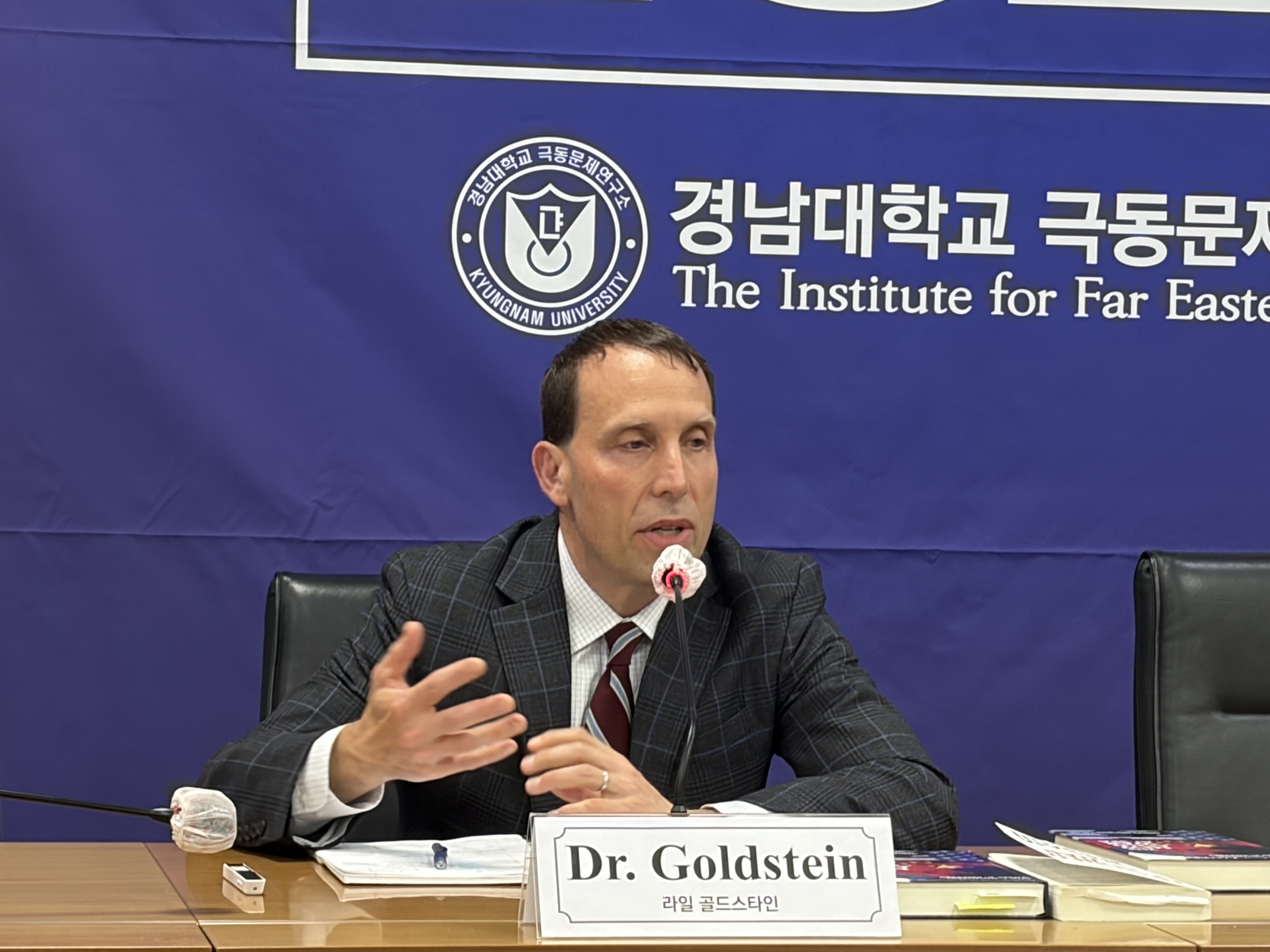
Senior Fellow Goldstein also highlighted South Korea’s potential for diplomatic autonomy amid the emerging new Cold War dynamic. He argued that “South Korea has historically maintained positive relations with both China and Russia and could play a greater role as a bridge or mediator in easing tensions associated with the new Cold War.” He further emphasized that, by leveraging its longstanding ties with both countries—an important diplomatic asset that distinguishes it from Japan—South Korea should seek to carve out its own independent diplomatic path.
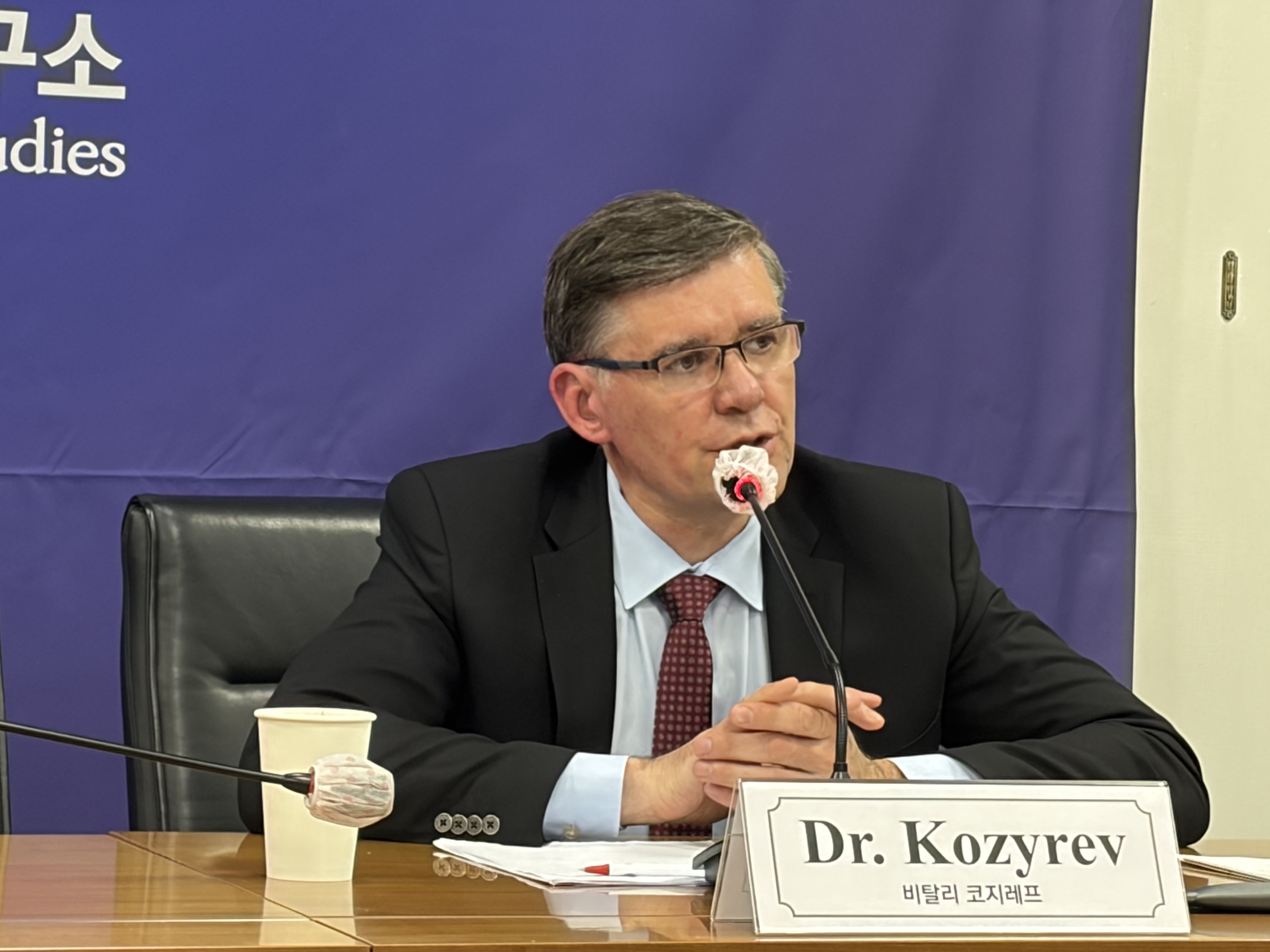
In the second presentation, Distinguished Professor Vitaly Kozyrev argued that China and Russia view issues on the Korean Peninsula not as isolated, one-off matters, but as part of the broader structure of great-power rivalry. He noted that “China–Russia cooperation is approached from a structural rather than an issue-based perspective,” and contended that the North Korean nuclear issue is likewise “part of the larger picture of strategic competition among major powers.”
In addition, he went on to explain that “the strengthening of North Korea’s status does not mean that China and Russia are adjusting their policies to accommodate Pyongyang, rather, it is a matter of socializing North Korea and guiding it toward becoming a normal state.” According to Professor Kozyrev, China and Russia are pursuing a strategy of ‘socialization’ aimed at transforming North Korea into a normal actor within the broader Eurasian order, rather than further isolating it. As examples, he cited efforts to encourage North Korea to develop closer relations with Belarus and to facilitate its participation in emerging multilateral frameworks such as the Shanghai Cooperation Organisation and BRICS Plus.
Professor Kozyrev also challenged the view that China is uneasy about the growing ties between North Korea and Russia, describing such assessments as ‘a misjudgment’. He argued that “Western claims that China is concerned about the strengthening of the North Korea–Russia military alliance are incorrect and misleading.” According to him, the primary objective of China–Russia cooperation is to engage with the Global South in order to “reshape an international environment characterized by U.S. hegemony and compel the United States to accept the rules of a new game.” He further noted that Russia’s experience in the war in Ukraine has demonstrated that “the mere possession of nuclear weapons does not guarantee security.” As a result, he said, “Russia is closely studying China’s serious approach to long-term strategic preparedness, including stockpiling strategic materials and developing underground infrastructure to prepare for the possibility of future U.S. strikes.”
The presentations were followed by a lively discussion and an in-depth Q&A session with experts.