
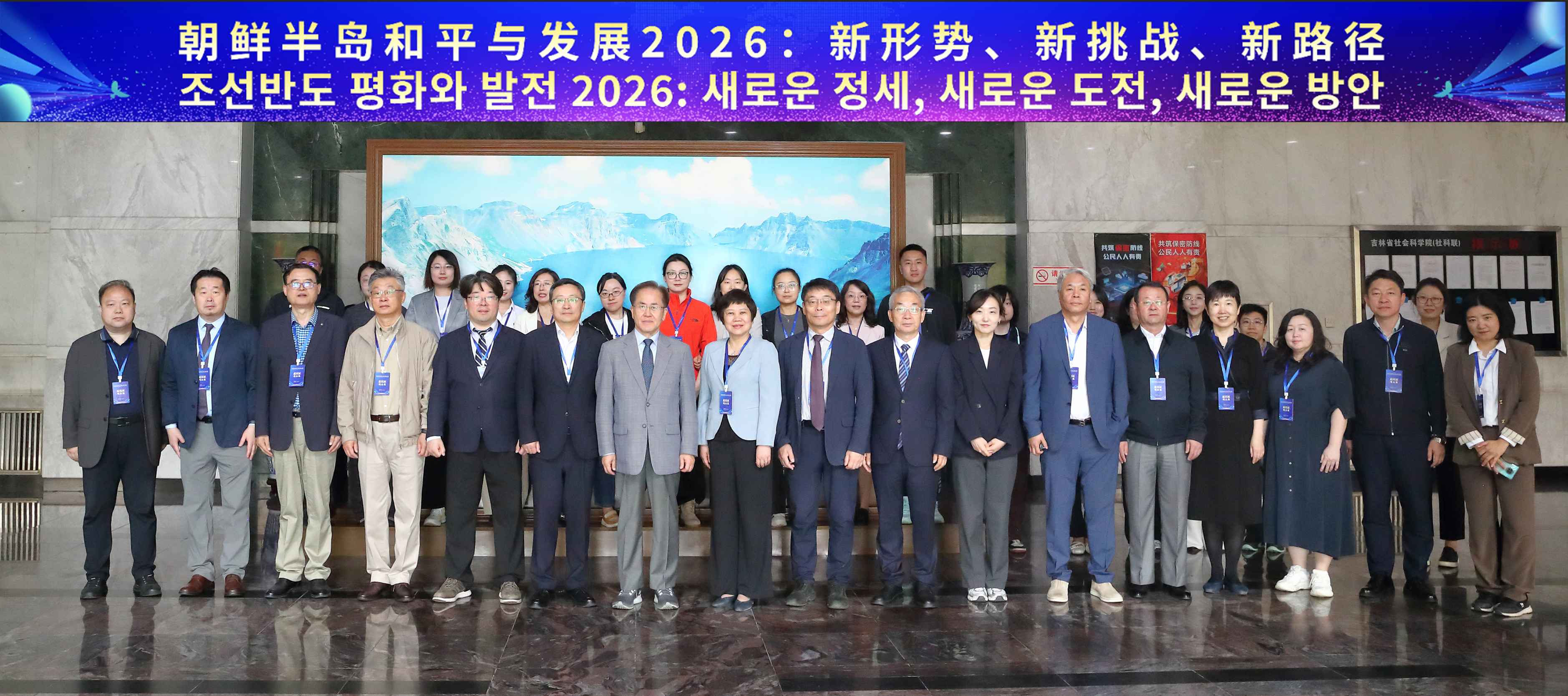
The Institute for Far Eastern Studies of Kyungnam University (Director Kwan-Sei Lee) held a joint academic conference on May 28 from 9:00 a.m. to 4:30 p.m. in the Conference Room on the third floor of the Jilin Academy of Social Sciences.
Participants from IFES included Kwan-Sei Lee (Director), Seong-Ryoul Cho (Visiting Professor), Hyung-Jong Lee (Professor), and Hyunjoo Oh (Research Fellow). Participants from the Chinese side included Liu Lixin (President of the Jilin Academy of Social Sciences), Yu Dayong (Vice President of the Jilin Academy of Social Sciences), Wang Hui (Director of the Institute of Korean Studies, Jilin Academy of Social Sciences), Xian Dong Han (Director of the Center for the Korean Peninsula Studies, China University of Political Science and Law), Ba Dianjun (Deputy Director of the Northeast Asian Research Center, Jilin University), Gong Jianze (Dean of the College of History and Culture, Beihua University), Man HaiFeng (Director of the Korean Peninsula Institute, Eastern Liaoning University), Zhang Xiaogang (Visiting Professor, College of History and Culture, Changchun Normal University), Piao Dongxun (Associate Dean of the Institute of Korean Peninsula Studies, Yanbian University), Zhang Huizhi (Vice Director of the Center for Northeast Asian Studies, Jilin University), Jin Meihua (Secretary-General of the Northeast Asian Research Center, Jilin Academy of Social Sciences), Zhao Lixin (Head of the Department of International Politics, College of Humanities and Social Sciences, Yanbian University), Guo Rui (Head of the Department of International Politics, Jilin University), and Suo Feng (Associate Professor, Faculty of Education, Northeast Normal University).
Under the moderation of Wang Hui, Director of the Institute of Korean Studies, Jilin Academy of Social Sciences, Session 1 was joined by Professor Xian Dong Han, Director Kwan-Sei Lee, Professor Ba Dianjun, and Professor Gong Jianze. The speakers examined the key challenges facing South Korea and China amid changing developments on the Korean Peninsula, reviewed the current state of inter-Korean relations and the Lee Jae Myung administration's North Korea policy, and analyzed how the complex geopolitical rivalries and conflicts unfolding across East Asia are affecting the Korean Peninsula.
With Professor Seong-Ryoul Cho serving as the moderator, Session 2 brought together Professor Hyung-Jong Lee, Professor Man HaiFeng, Director Wang Hui, and Professor Zhang Xiaogang to assess the achievements and societal impact of South Korea–China cultural exchanges and explore practical pathways for enhancing bilateral cooperation. The participants also examined the outlook for the second Trump administration's North Korea policy and discussed the external environment and key challenges shaping future South Korea–China cooperation.
In Session 3, Professor Ba Dianjun served as the moderator, while Professor Piao Dongxun, Research Fellow Hyunjoo Oh, Professor Zhang Huizhi, and Secretary-General Jin Meihua examined North Korea's strategic recalibration and the future direction of inter-Korean relations in light of major political events and policy changes. The participants further analyzed the prospects for China–North Korea economic relations and the evolving trends in North Korea’s economic policies and external cooperation, while discussing potential areas for cooperation between South Korea and China.
Session 4 was moderated by Professor Hyung-Jong Lee and featured contributions from Professor Zhao Lixin, Professor Seong-Ryoul Cho, Professor Guo Rui, and Associate Professor Suo Feng. Together, they reviewed the challenges confronting discussions on the denuclearization of the Korean Peninsula following North Korea's incorporation of its nuclear force policy into its constitution. They also examined how security crises outside the region, including the Iran war, spill over into security dynamics on the Korean Peninsula, and explored strategic options for maintaining peace and stability amid the evolving regional order in Northeast Asia.
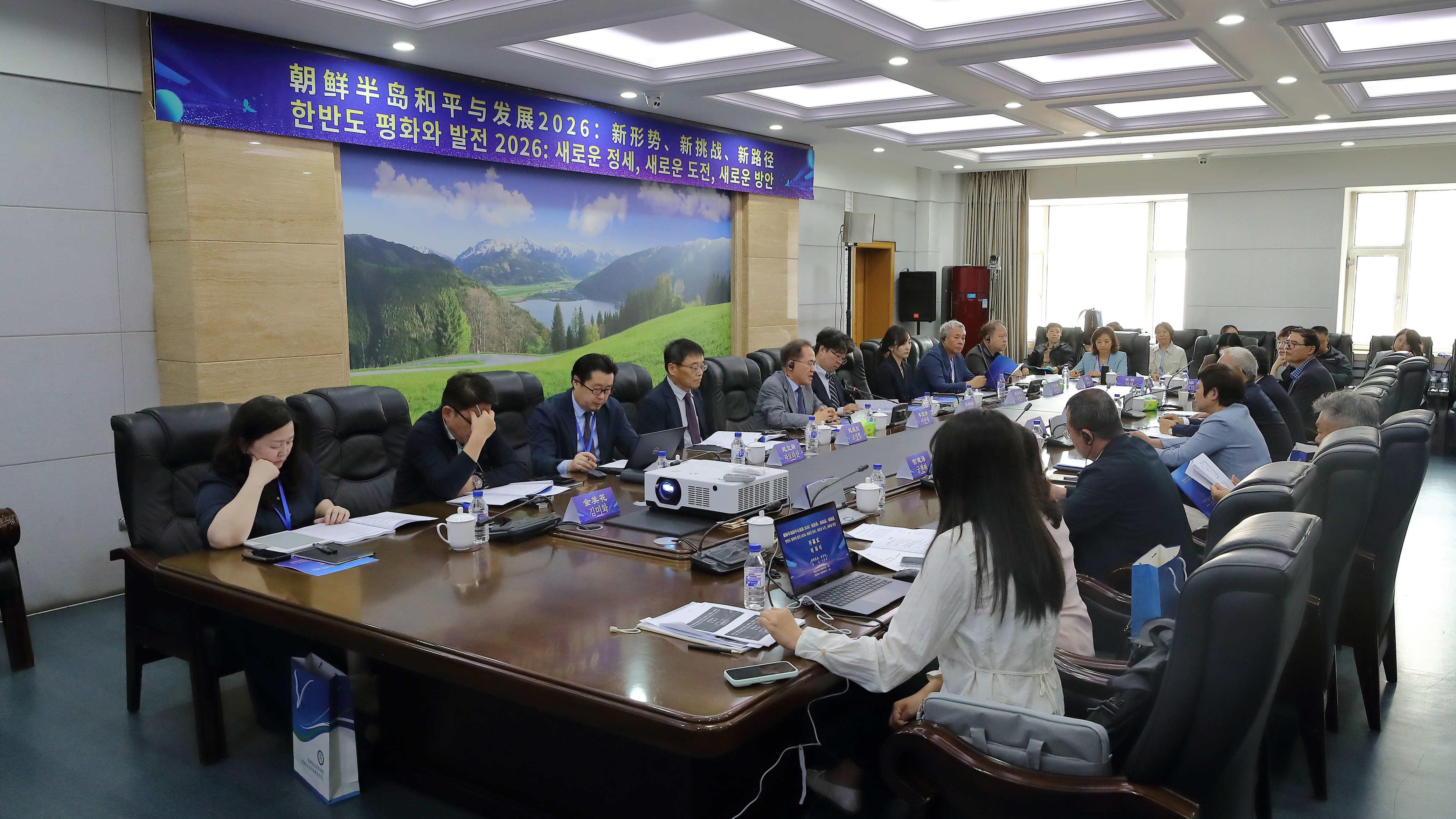
This joint academic conference was held as a concrete step toward implementing the academic exchange agreement signed in December 2024. Both sides agreed to hold a joint conference annually on a reciprocal basis through mutual institutional visits, and to further expand ongoing academic exchanges and collaborative research.